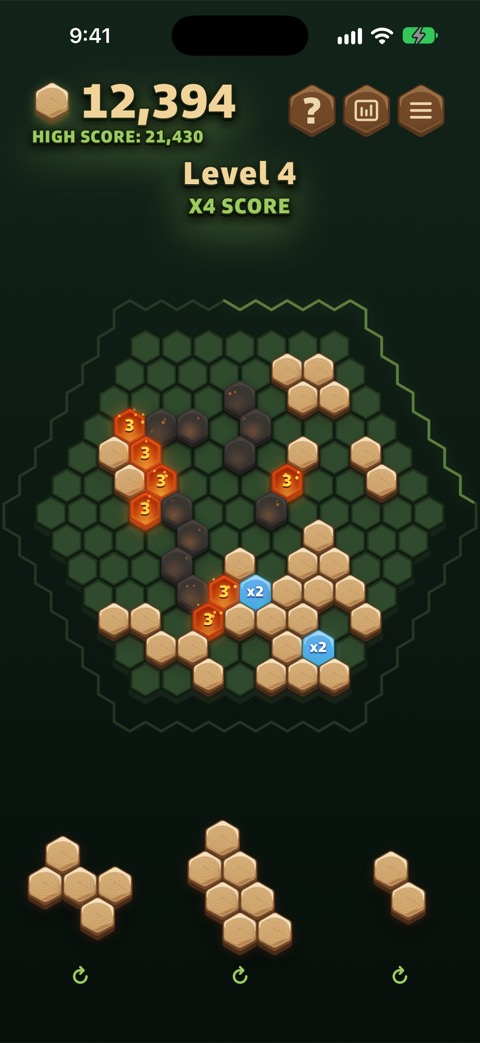
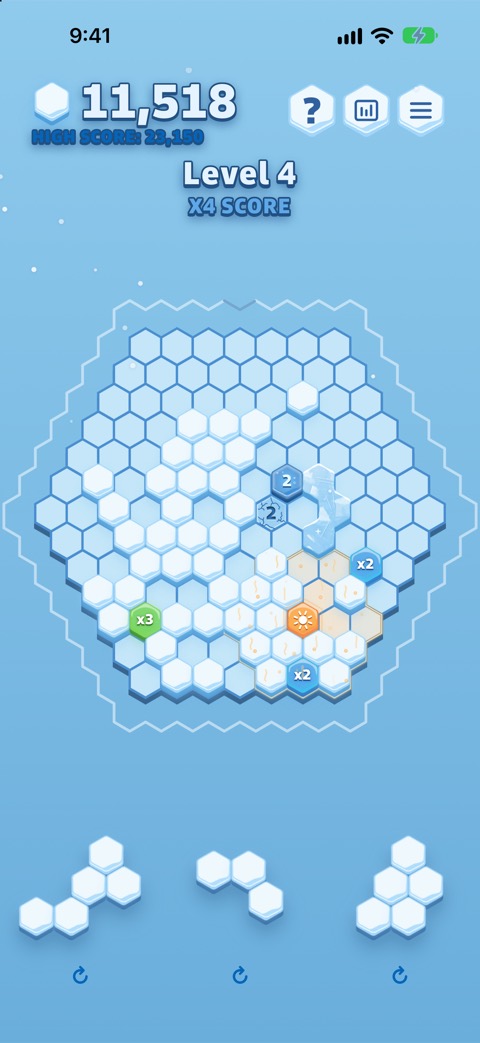
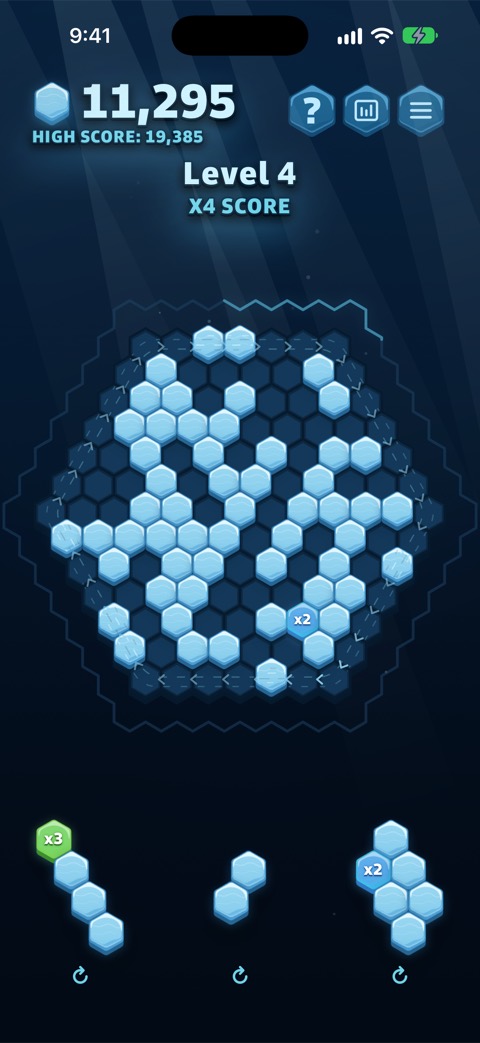
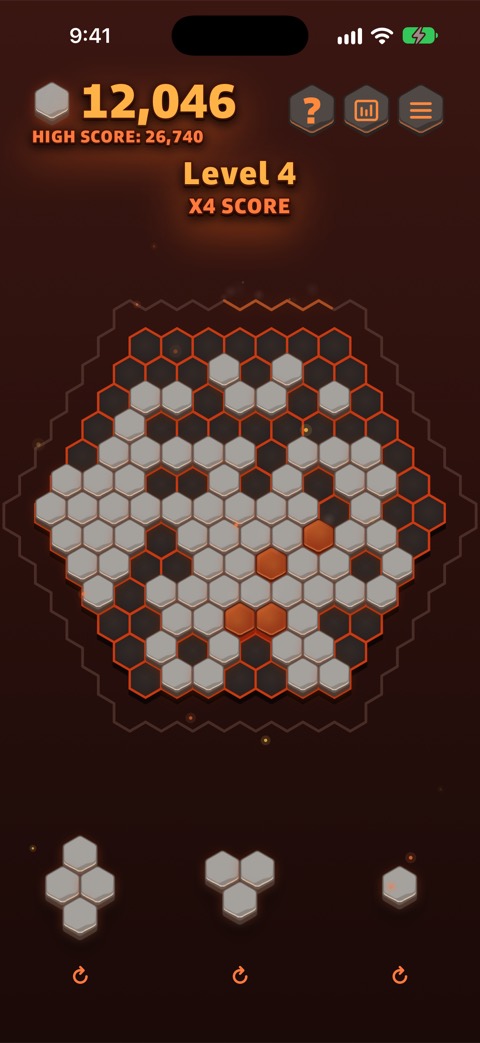
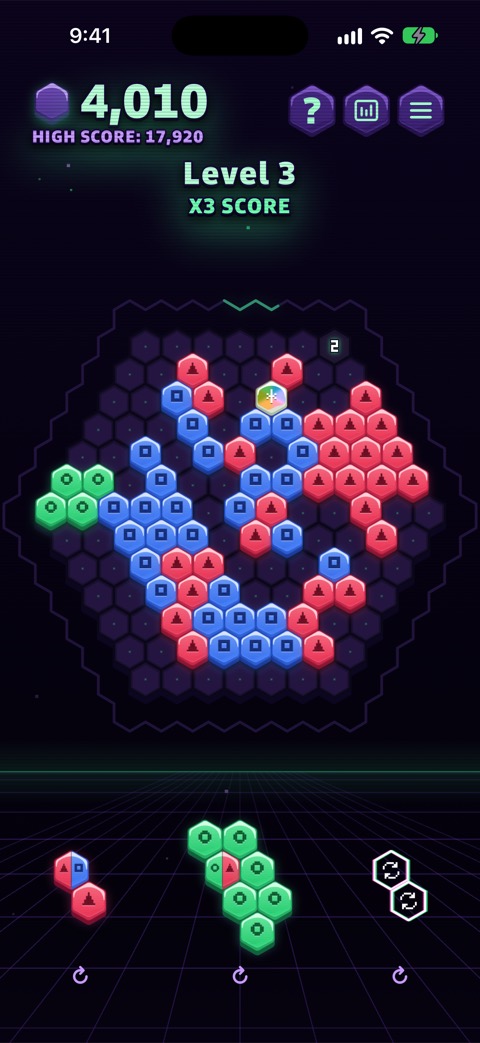
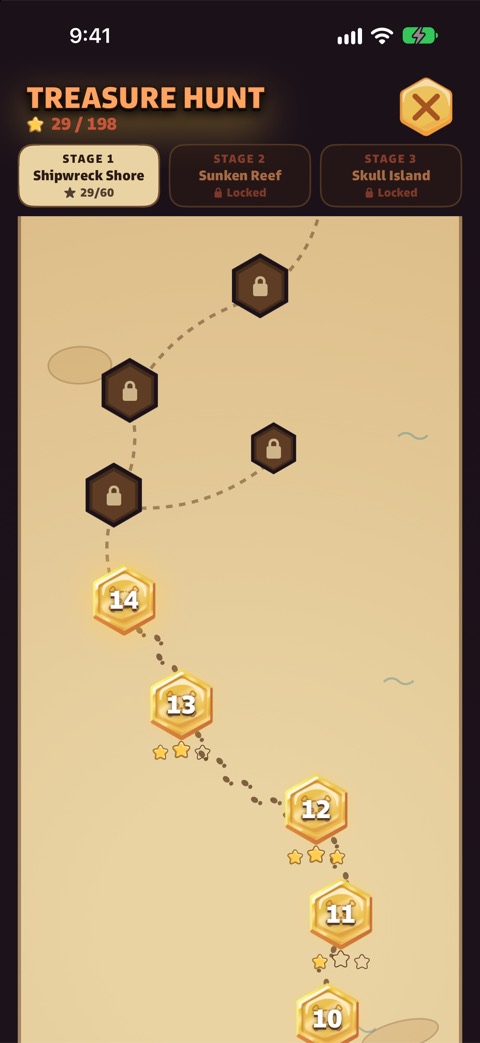
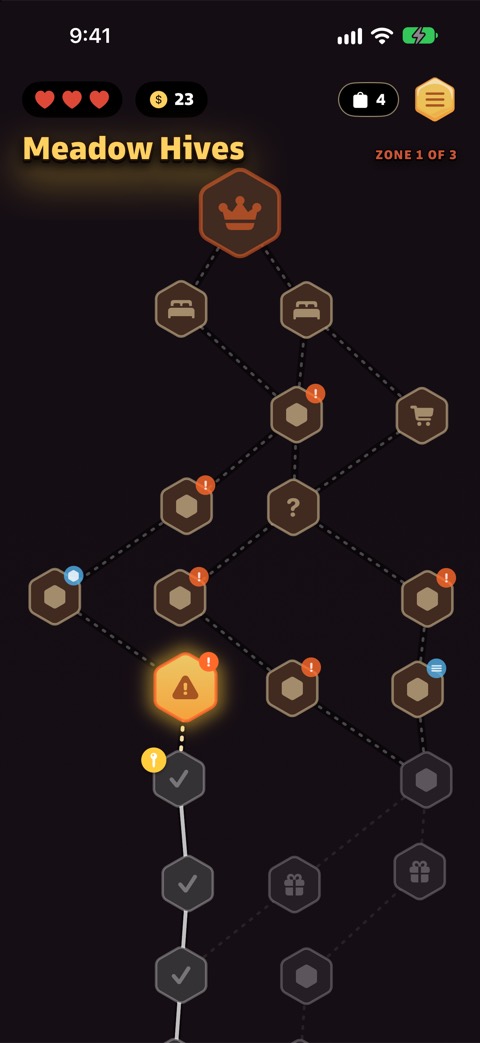
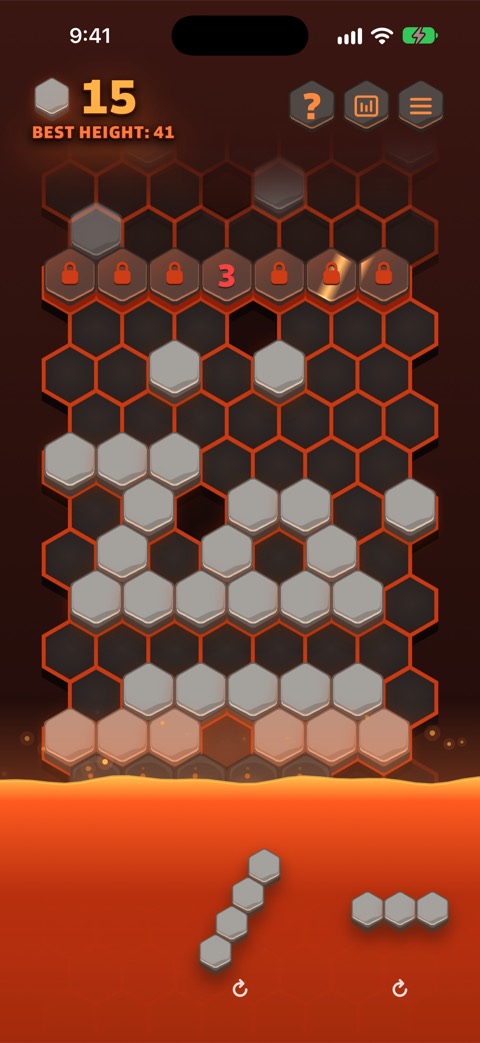
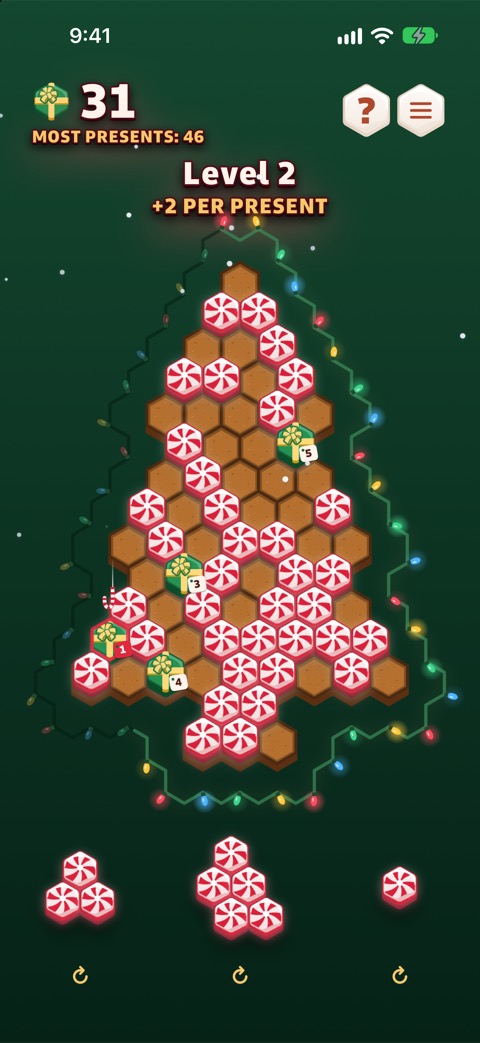
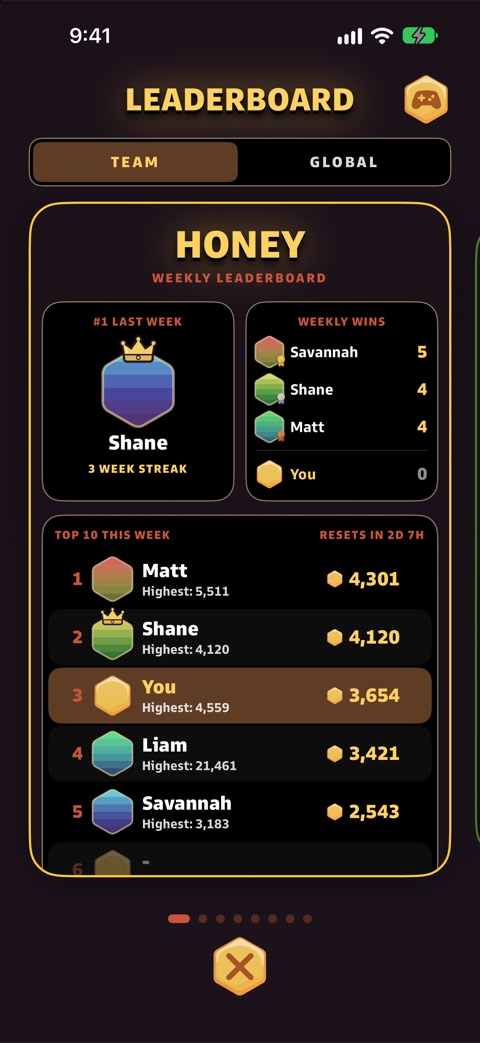
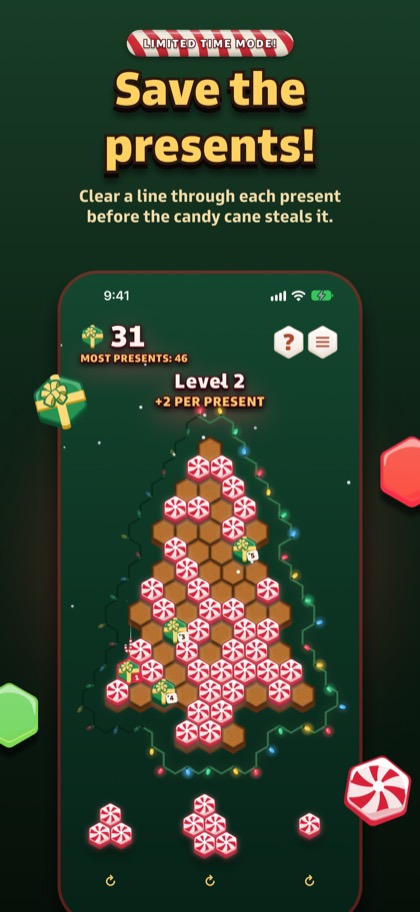
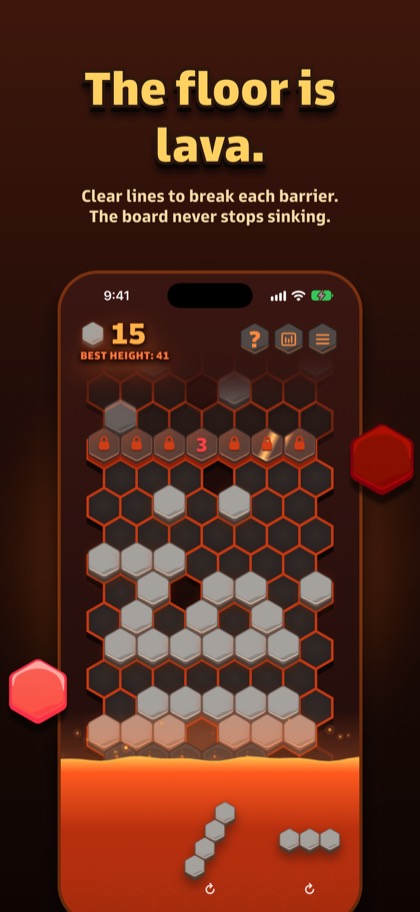
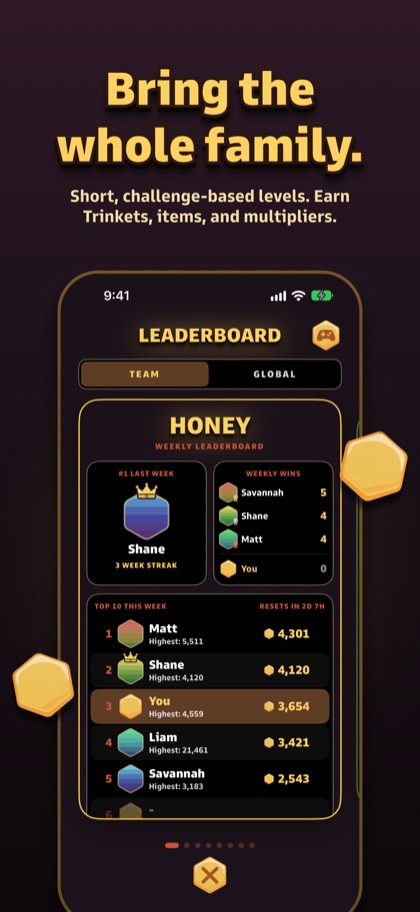
A hex tile-matching game with nine ways to play, global and team leaderboards, and a soundtrack that changes with every world. I designed and built all of it.

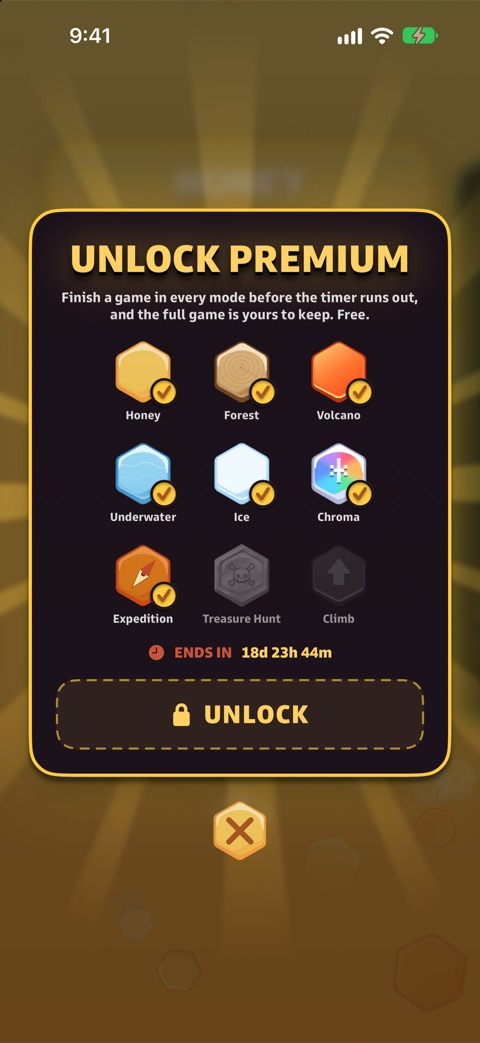
Hex Quest started as Honey Hive, a single honeycomb board. It grew into a full game with nine modes, songs rearranged for every world, one engine running on iOS and Android, live leaderboards and a website to sell it. A big group of beta testers played it through several rounds on TestFlight and Google Play. It’s now live on the App Store, and the Android version is coming soon.
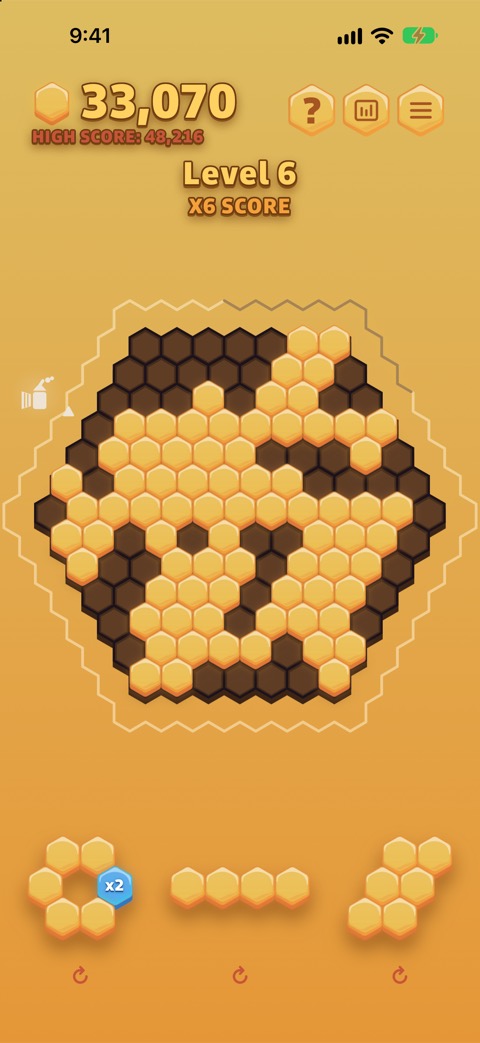
Every mode starts from the same idea: drop pieces, clear lines. Then each one finds a new way to mess with you.


Every world has its own arrangement of each song, and they all play in sync, so switching worlds never skips a beat. This is the mixer from the hexquest.app home page. Pick a song, press play and tap through the worlds.
Press play, then tap a world.
Rotation is my favorite thing in Hex Quest, and the feature I rebuilt the most. A piece is a handful of hexes, each with its own shine and shadow. Turning one convincingly took five versions.
The first version just swapped in the turned shape. It worked, but the piece jumped, and nothing showed your eye how it got there.
Recreated from frames of the final buildThen the tiles animated to their new spots one by one and slid through each other. A later pass wound up the wrong way, swung wide and left ghost tiles fading in their old spots.
My slowed-down screen recording, Oct 28Turning the whole piece as one image kept the tiles together, but the light turned with it. Every highlight and shadow spun round, as if the sun had moved.
Same recordingThe fix was to draw the old and new shapes together. Both turn around one pivot that drifts between their centers, and a correctly lit copy fades in over the middle of the turn.
Slowed down so you can see the swapOne ease-in-out turn in 0.24 seconds, and a Boost stays on its own tile all the way round. The same turn plays for a tap in the tray, a second finger while dragging and Hold to Rotate, on iOS and Android.
The final build, full speedThere was one more bug: a single frame of the finished shape flashed before each turn began. It only showed up when I stepped through a slowed recording frame by frame, and it’s fixed now.
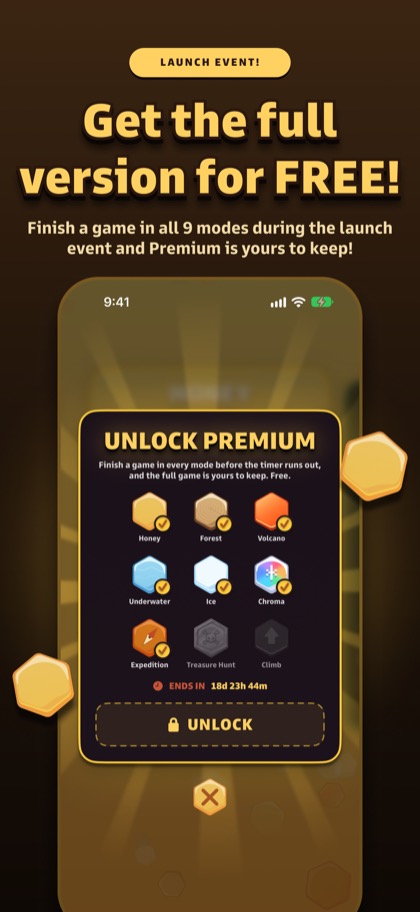
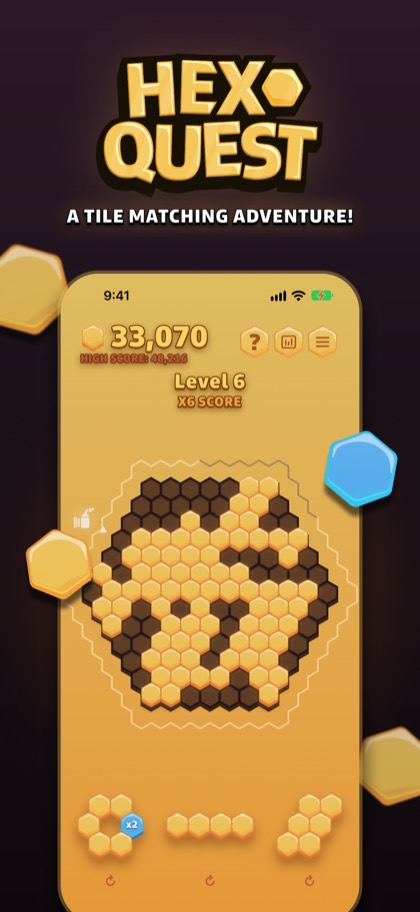
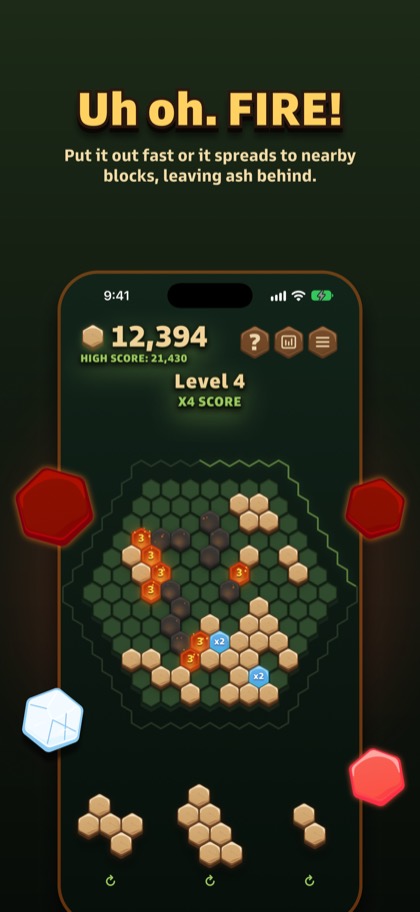
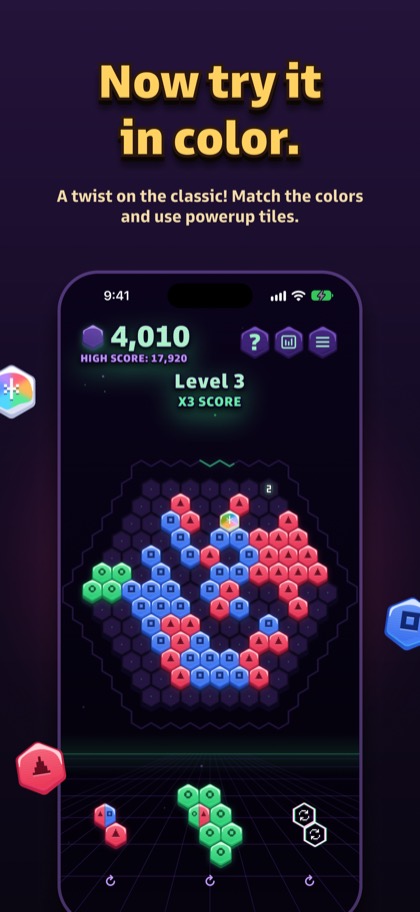
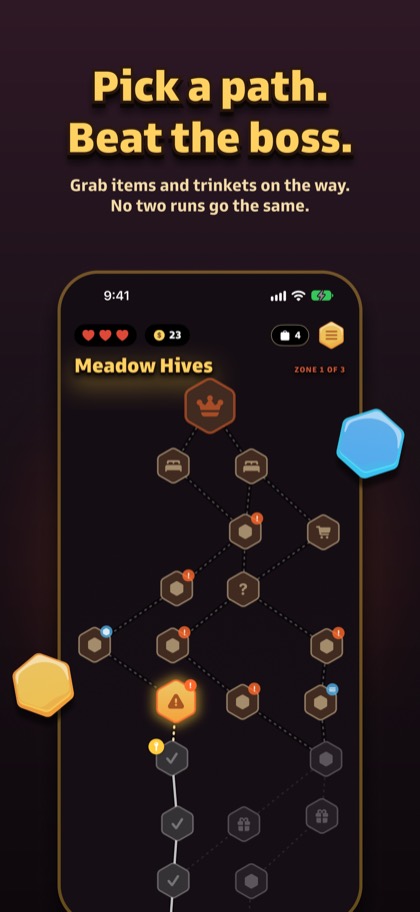
I designed the store listing too: ten screenshots, sized for iPhone, iPad and iPhone Duo. It’s out now on the App Store, and the Android version is coming soon to Google Play.


Out now on the App Store, with Android coming soon. Have a product that needs designing and building end to end? I鈥檇 love to hear about it.